











Snow Rider
Snow Rider Gameplay Mechanics and Technical Overview
| System Metric | Telemetry Data |
|---|---|
| Developer Studio | Unknown/Independent |
| Input Schema | WASD / Arrow Keys |
| Rendering Engine | WebGL 3D |
| Primary Loop | Endless Descent |
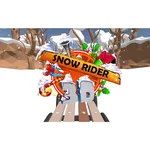
Stepping into the world of Snow Rider feels like a gentle descent into a winter wonderland, but don't let the crisp, white aesthetic fool you. This title demands absolute focus from the moment your character hits the ice. As a veteran of arcade-style endless runners, I can tell you that the simplicity of Snow Rider masks a deceptive difficulty curve that catches many players off guard.
The core of the experience revolves around maintaining speed while avoiding stationary and moving hazards. In Snow Rider, your primary input involves steering through a narrow corridor of procedurally generated obstacles. If you lose focus for even a split second, your run ends abruptly against a tree or a jagged rock formation.
The Illusion of Safety on the Slopes
When you first launch Snow Rider, the game presents you with a smooth, inviting path. You might think that you can simply hold down a direction and cruise to a high score. However, that is the first trap the game sets for you. Snow Rider quickly introduces tighter turns and more frequent obstacles as you pick up velocity.
The physics engine in Snow Rider is surprisingly responsive, allowing for tight, twitch-based movements. You need to calibrate your reaction time to the increasing speed of your character. As you progress, the environment shifts, requiring you to anticipate the next hazard before it even enters your field of view.
Pro Tip: Always keep your eyes focused on the mid-distance rather than your current position. This allows you to identify upcoming obstacles in Snow Rider well before you reach them.
Many newcomers to Snow Rider fail because they over-correct their steering. Because the acceleration is constant, jerky movements often lead to collisions. Instead, focus on fluid, sweeping motions to keep your momentum high without sacrificing precision.
Navigating Frozen Obstacles and Hazards
The real challenge in Snow Rider lies in the variety of hazards scattered across the mountain. From solid rock formations to moving snowballs, the game forces you to constantly adapt your route. Mastering these hazards is the only way to climb the leaderboard.
Identifying and Avoiding Collision Points
To survive in Snow Rider, you must memorize the hitboxes of the various environmental objects. Trees are your most common enemy, often appearing in clusters that block your path. Snow Rider requires you to weave through these gaps with surgical precision.
Beyond trees, you will face:
- Jagged Rocks: These have unforgiving, wide hitboxes that punish greedy players.
- Rolling Snowballs: These moving hazards in Snow Rider require you to shift lanes early.
- Narrow Passages: High-speed sections where the margin for error is effectively zero.
When you encounter a shield or a speed boost, the decision-making process becomes critical. Sometimes, the risk of grabbing a power-up in Snow Rider outweighs the reward. If a shield is placed behind a cluster of trees, it is often better to bypass it and maintain your current line.
Utilizing Movement Mechanics
Your ability to move effectively depends on your understanding of the controls. Whether you use the WASD keys or the arrow keys, the responsiveness is identical. However, the way you chain these inputs determines your success in Snow Rider. Mastering drift-steering is essential for those tight corners that appear during high-speed runs.
Don't just tap the keys; learn the rhythm of the game. Snow Rider has a cadence to it, much like a rhythm game. Once you internalize this, you will find that you can navigate the most difficult sections of Snow Rider with ease. It is all about finding that flow state where your fingers move instinctively.
Mastering Descent Momentum and Skill
The final hurdle in Snow Rider is overcoming the psychological pressure of the long run. As your score climbs, the game increases the speed, making every decision feel more consequential. This is where true skill separates the casual player from the veteran.
The Grind for High Scores
If you want to reach the top of the leaderboards in Snow Rider, you need to prioritize score multipliers over simple survival. Collecting items is great, but maintaining a long, unbroken streak is what truly matters. Snow Rider rewards consistency above all else.
Remember that your sled choice can also influence your playstyle. While the Santa sled might look festive, other models in Snow Rider may offer different visual feedback that helps you judge distances better. Experiment with every option until you find the one that fits your personal comfort zone.
Advanced Techniques for Long Runs
To push your limits, you must practice predictive steering. Instead of reacting to an obstacle in Snow Rider as it appears, you should be looking for the opening that leads to the next path. This proactive approach is the hallmark of every top-tier player.
Keep practicing, keep failing, and keep restarting. Snow Rider is a game of attrition as much as it is a game of skill. Every crash is a lesson in positioning and timing. By analyzing your mistakes, you will eventually conquer the mountain and set a score that stands the test of time.
Frequently Asked Questions About Snow Rider
How can I improve my high score in Snow Rider?
To improve your score, focus on maintaining a constant, high-speed line. Avoid unnecessary movements and learn to predict where the next gap in the obstacles will appear. Consistent movement in Snow Rider is the key to multiplying your total points.
Are there specific sleds that handle better in Snow Rider?
While the physics engine remains consistent across all models in Snow Rider, certain sleds provide better visual clarity. Choosing a sled that contrasts well with the snow can help you identify obstacles faster, giving you a slight edge during intense runs.
How do I handle the high-speed sections in Snow Rider?
The best way to handle high speed is to avoid over-steering. In Snow Rider, small, controlled movements are far more effective than large, erratic ones. Once you reach maximum speed, focus on 'feathering' your keys to make minor adjustments rather than large turns.