














Spider Solitaire
Spider Solitaire Core Mechanics & Tactical Data
| Metric | Value |
|---|---|
| Developer | Various (Classic Public Domain) |
| Deck Count | 2 Standard 52-Card Decks |
| Total Cards | 104 |
| Primary Goal | Complete 8 King-to-Ace sequences |
When you sit down to play Spider Solitaire, you are engaging with a masterclass in card-based logistics. This isn't just about shuffling cards; it is about managing a complex, ever-evolving tableau that demands high-level foresight. Every movement you make in Spider Solitaire ripples across the remaining board state, potentially unlocking or burying critical cards.
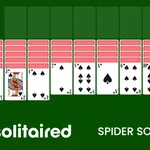
The game engine relies on a 104-card system distributed across ten tableau columns. Understanding how these columns interact is the first step toward becoming a consistent player. Spider Solitaire forces you to look at the board as a series of interconnected dependencies rather than individual cards.
Tableau Management
Success in Spider Solitaire begins with how you organize the tableau. You start with 54 cards already laid out, and your primary objective is to expose hidden cards. Moving a card to a rank-higher position is the fundamental mechanic that drives progress. By shifting stacks, you expose the face-down cards underneath, which is the only way to expand your available options.
It is vital to prioritize moves that reveal the most cards. In Spider Solitaire, leaving a face-down card buried is often the equivalent of a soft-lock. Always scan for potential moves that clear the path to these hidden assets before drawing from your stockpile.
The Foundation Loop
Once you complete a full sequence from King to Ace, the game automatically clears it to the foundation. This is the ultimate goal in Spider Solitaire. Watching those completed suits vanish from the board is incredibly satisfying, but it also provides a strategic advantage by opening up space.
Pro-tip: Always aim to complete sequences in the same suit early. While Spider Solitaire allows you to move cards of different suits, keeping them matched makes the final assembly significantly faster and less prone to errors.
Mastering the Spider Solitaire Difficulty Curve
The beauty of Spider Solitaire lies in its scalability. Whether you are a casual player or a seasoned veteran, the game adjusts to your skill level through suit configuration. Choosing the right difficulty is essential for maintaining a healthy win rate while still feeling challenged by the mechanics of Spider Solitaire.
One-Suit vs Four-Suit Logic
The one-suit version of Spider Solitaire is an excellent training ground. Because all cards are of the same suit, you do not need to worry about color or suit matching constraints. This allows you to focus purely on the sequencing logic and tableau management required to win.
Conversely, the four-suit variant of Spider Solitaire is the gold standard for competitive play. Here, you must manage four distinct suits simultaneously. You cannot move a sequence unless the cards are of the same suit, which drastically increases the difficulty. Mastering this requires you to plan multiple moves ahead, ensuring you do not trap yourself by misplacing a card.
Stockpile Conservation
The stockpile is your final resort in Spider Solitaire. Many players make the mistake of drawing from the stockpile too early. You should only tap the deck when there are no other viable moves on the tableau. Using the stockpile too quickly can clutter the board, making it difficult to find the moves you actually need.
When you do draw from the stockpile, a new card is placed on every column. In Spider Solitaire, this can disrupt your existing sequences. Always evaluate the board before drawing to ensure that the new cards will not prevent you from making key connections.
Elevating Your Spider Solitaire Win Rate
If you want to win consistently, you need to treat every hand of Spider Solitaire like a puzzle. Luck is a factor, but skill is the primary driver of success. By adopting a more analytical approach, you can turn seemingly impossible boards into victories.
Strategic Sequencing
Focus on building long sequences whenever possible. In Spider Solitaire, long sequences are easier to manage than many short ones. When you build a long chain, you effectively create a 'safe' stack that can be moved as a single unit. This is a core mechanic that every Spider Solitaire player must master to succeed.
- Always prioritize revealing face-down cards.
- Keep columns empty for as long as possible.
- Build sequences in the same suit to avoid future blocks.
- Use the undo button to test different move variations.
Empty Column Utilization
Empty columns are the most valuable resource in Spider Solitaire. You can place any card or sequence into an empty space, providing you with a temporary holding area. This allows you to reorganize your tableau, move problematic cards, and expose even more hidden cards.
Never waste an empty column on a trivial move. Save it for when you absolutely need to displace a card that is blocking your progress. Learning when to create and when to fill an empty column is what separates a novice from an expert in Spider Solitaire.
Frequently Asked Questions About Spider Solitaire
How can I improve my win rate in Spider Solitaire when playing the four-suit version?
To win more often in four-suit Spider Solitaire, focus on keeping your columns organized by suit. Avoid moving cards between different suits unless absolutely necessary. Prioritize creating empty columns, as these are your most powerful tools for rearranging the board and unblocking critical sequences.
Why does the game sometimes feel impossible to win?
Some hands of Spider Solitaire are statistically unwinnable depending on the initial deal. However, most losses are due to 'bad' moves made early on. Always try to reveal as many face-down cards as possible before drawing from the stockpile to maximize your available options.
Is there a trick to managing the stockpile in Spider Solitaire?
The trick is patience. Never draw until you have exhausted every single possibility on the board. When you draw, you introduce 10 new cards, which can easily bury your existing progress. Only draw when you are certain that no further moves exist in the current layout.
Ultimately, Spider Solitaire is a game of patience and tactical precision. Whether you are playing for relaxation or to sharpen your mind, the core loops of Spider Solitaire offer endless depth. Keep practicing, analyze your mistakes, and you will find that even the toughest Spider Solitaire games become manageable over time.
The satisfaction of clearing a full board in Spider Solitaire is unmatched. By focusing on the fundamentals, managing your tableau, and using your tools wisely, you will dominate the game. Remember, every move in Spider Solitaire is a lesson in strategy, so play with intent and enjoy the process of solving the puzzle.
As you continue your journey through Spider Solitaire, you will develop an intuition for the patterns. This game is a timeless classic for a reason. Keep playing Spider Solitaire, and you will see your skills improve with every single card you move.